Picture this: I’m halfway through a week of bland, overcooked dinners, my pantry looking like a grocery store that’s been on a strict diet, and my taste buds are screaming for something that’s both comforting and daring. I’m standing in the kitchen, whisk in one hand, a pot of boiling water in the other, and I’m suddenly struck by a memory of a childhood winter evening when my grandmother would stir a thick, earthy soup that made the whole house smell like a warm hug. That memory, coupled with the frustration of last night’s burnt carrots, set me on a mission: to craft a carrot soup that would not only satisfy that craving for depth but also bring a fiery kick that would make my friends swear they’d never tasted a vegetable soup that could double as a stand‑alone main dish.
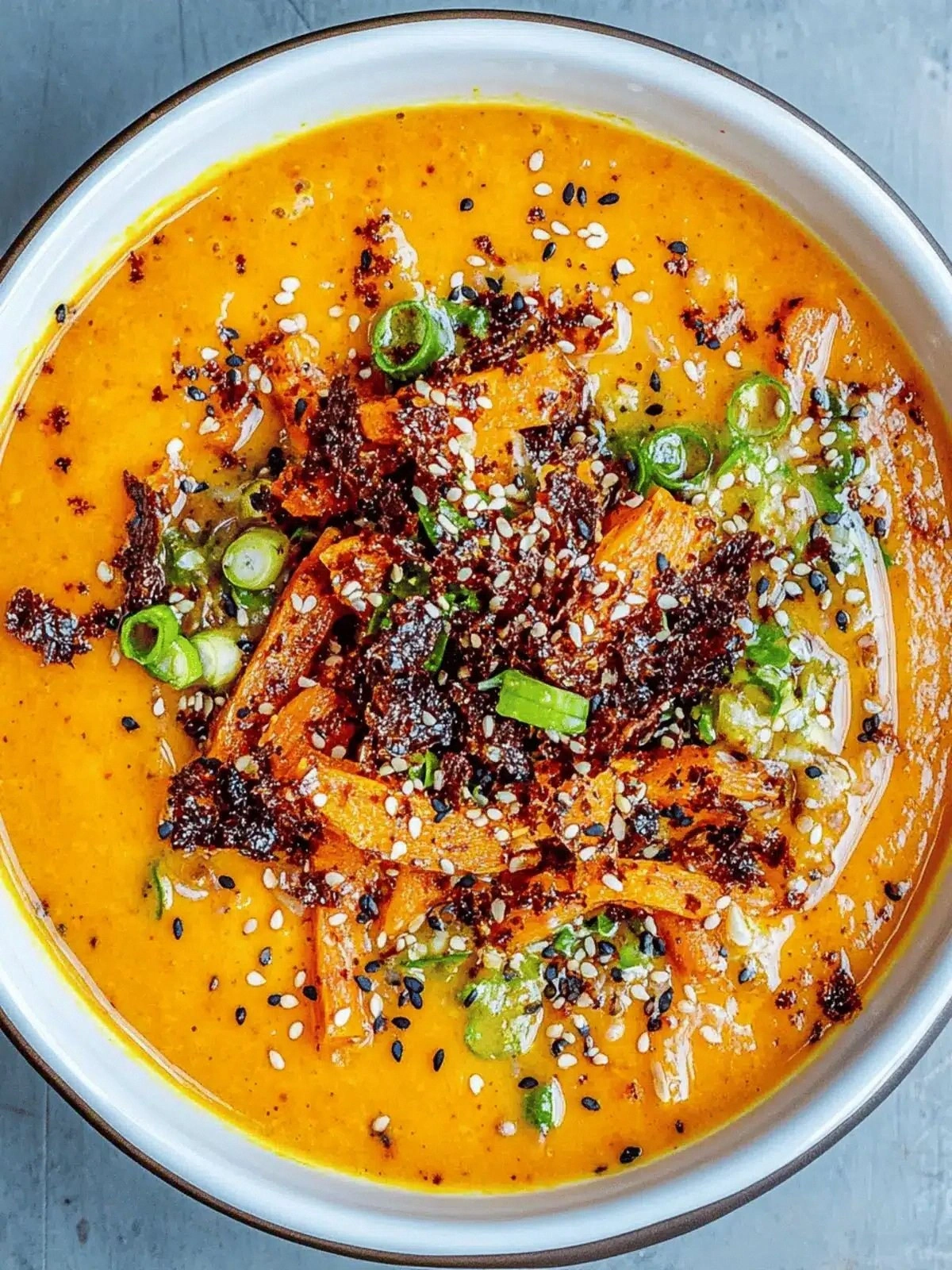
From the moment the carrots hit the skillet, the aroma is a promise—sweet, caramelized, and slightly nutty. The sizzle is like a tiny drumbeat that signals the beginning of a flavor orchestra. When you first taste it, the miso gives a silky umami backdrop, while the sriracha injects a punch that lingers on the palate. The coconut milk softens the heat, creating a creamy texture that feels like a warm blanket for your mouth. And the final splash of fresh cilantro and green onions? It’s the bright, green finale that leaves you wanting a second bite.
What makes this version stand out isn’t just the combination of miso, sriracha, and coconut milk—it’s the precision with which each element is orchestrated. I’ve fine‑tuned the roasting of carrots to bring out their natural sugars without turning them to mush. I’ve chosen a low‑sodium miso paste that balances depth with subtlety, allowing the sriracha to shine without overwhelming. The use of a can of coconut milk instead of the usual heavy cream keeps the dish vegan and light, yet rich. And the final garnish of cilantro and green onion adds a pop of color and freshness that makes the dish visually striking.
But there’s a twist that most recipes overlook: the carrot-to‑broth ratio. By keeping the broth just enough to cover the carrots, the soup achieves a silky consistency that’s thicker than a chowder but still pourable. I dare you to taste this and not go back for seconds. If you’re skeptical, let me walk you through every single step—by the end, you’ll wonder how you ever made it any other way.
Let’s dive in. I’ll keep the instructions simple, but I’ll add a few playful notes and micro‑challenges to keep you engaged. Whether you’re a seasoned cook or a kitchen rookie, you’ll find that this soup is both approachable and impressive. So grab your skillet, set your timer, and let’s get started on what might just be the best version of carrot soup you’ll ever make at home.
What Makes This Version Stand Out
- Flavor Depth: The caramelized carrots bring a natural sweetness that balances the umami of miso and the heat of sriracha. This synergy creates a taste profile that feels both comforting and adventurous.
- Texture Precision: Roasting the carrots until just tender preserves their bite, preventing a soupy mush that can dilute the dish’s character.
- Vegan Friendly: Coconut milk replaces dairy, making the soup creamy without compromising the plant‑based ethos many of us cherish.
- Heat Management: The sriracha is measured to give a steady kick that lingers, rather than a sudden burn that overwhelms.
- Visual Appeal: The orange glow of carrots against the green of cilantro and the subtle sheen of coconut milk make the dish Instagram‑ready.
- Make‑Ahead Potential: The soup keeps its flavor profile even after refrigeration, making it perfect for meal prep.
- Ingredient Quality: Fresh, organic carrots and locally sourced ginger elevate the overall taste, turning a simple bowl into a culinary statement.
Alright, let's break down exactly what goes into this masterpiece…
Inside the Ingredient List
The Flavor Base
At the heart of this soup lies a trio of aromatics—onion, garlic, and ginger. Each one plays a distinct role: the onion adds sweetness, the garlic provides depth, and the ginger injects a subtle heat that complements the sriracha. When sautéed together, they create a savory foundation that carries the miso’s umami through the broth. Skipping any of these would leave the soup feeling flat; the dish would lack that layered complexity that makes it memorable.
The Texture Crew
Carrots are the star of the show, but their role isn’t just to provide sweetness. Roasting them until just tender caramelizes their natural sugars, creating a silky mouthfeel that contrasts with the broth’s smoothness. The vegetable broth, meanwhile, acts as the medium that ties everything together. Choosing a low‑sodium, organic broth ensures the soup stays balanced without the saltiness that can overpower the miso. If you prefer a thicker soup, use a reduced‑sodium broth or add a splash of cashew cream.
The Unexpected Star
Miso paste, often reserved for Japanese dishes, is the secret sauce that turns this carrot soup into something extraordinary. Its fermented richness adds a savory depth that is hard to replicate with other seasonings. The 3 tablespoons of miso are enough to coat the carrots like velvet, yet not so much that it dominates. If you’re allergic to soy, you can substitute with a 1:1 ratio of fermented coconut sauce or a small amount of miso‑free tahini blended with a dash of soy sauce.
The Final Flourish
The coconut milk brings a creamy, tropical undertone that softens the heat from the sriracha. It also adds a subtle sweetness that balances the dish’s savory elements. The fresh cilantro and green onions add a bright, green contrast, both in color and flavor, that lifts the overall profile. If you’re looking for an extra crunch, sprinkle some toasted pumpkin seeds or crushed almonds on top before serving. This final flourish not only adds texture but also a nutty aroma that completes the sensory experience.
Everything’s prepped? Good. Let’s get into the real action…
The Method — Step by Step
- Heat a large, heavy‑bottom pot over medium heat and drizzle the tablespoon of olive oil. Add the finely diced onion, letting it soften until translucent—about 3–4 minutes. Stir in the minced garlic and grated ginger, and let them sing for 30 seconds until fragrant. This is the moment of truth; if the aromatics burn, they’ll ruin the soup’s delicate balance.
- Introduce the sliced carrots to the pot, stirring to coat them with the oil and aromatics. Roast for 8–10 minutes, turning occasionally, until the carrots develop a golden hue and a slight caramelization. The sizzle here is a cue that the sugars are blooming, creating a natural sweetness that will carry through the broth.
- Pour in the vegetable broth, ensuring the carrots are just covered. Bring the mixture to a gentle simmer, then reduce the heat to low and let it stew for 15 minutes. The slow simmer allows the flavors to meld, while the broth infuses the carrots with savory depth.
- Stir in the miso paste, soy sauce, and sriracha. Use a whisk or spoon to dissolve the miso fully; it should coat the broth like a glossy glaze. Taste the soup, and adjust the seasoning with salt and pepper to your liking. Remember, miso is salty, so start light.
- Add the coconut milk, stirring gently to combine. The mixture should reach a gentle boil, then reduce to a low simmer for 5 minutes. This brief cooking time prevents the coconut milk from separating and keeps the soup silky.
- Use an immersion blender to puree the soup until smooth, or transfer to a countertop blender in batches. The texture should be velvety, with no lumps of carrot. If you prefer a chunkier soup, reserve a few carrot pieces for texture.
- Return the soup to the pot, adjust the heat to keep it warm, and let it sit for 5 minutes. This resting period allows the flavors to fully marry and the heat to distribute evenly.
- Just before serving, stir in the chopped green onions and cilantro. The fresh herbs will add a bright, green burst that cuts through the richness. Ladle the soup into bowls, and garnish with a drizzle of coconut milk if desired.
That’s it — you did it. But hold on, I’ve got a few more tricks that’ll take this to another level…
Insider Tricks for Flawless Results
The Temperature Rule Nobody Follows
Most cooks assume that once the broth is simmering, the soup is done. I’ve found that maintaining a low, steady simmer—around 180°F (82°C)—ensures the carrots soften without breaking apart. Use a kitchen thermometer to keep the temperature consistent; this small step guarantees a silky consistency every time.
Why Your Nose Knows Best
Before you taste the soup, pause and inhale deeply. The aroma of caramelized carrots, miso, and coconut is the real indicator of readiness. If the scent feels flat or overly sharp, give it another five minutes to develop. Trust your nose; it’s a better judge than your eyes.
The 5‑Minute Rest That Changes Everything
After blending, let the soup sit for 5 minutes before serving. This brief rest allows the flavors to meld, and the heat to distribute evenly. It also gives the coconut milk a chance to settle, preventing a sudden burst of creaminess when you first taste it.
Use a Whisk, Not a Spoon, to Mix Miso
When dissolving miso, whisk vigorously until it’s fully incorporated. A whisk breaks down the paste more efficiently than a spoon, ensuring a smooth, lump‑free broth. If you’re in a hurry, a hand blender can also do the trick, but a whisk is the gold standard.
Keep the Carrot Bite Intact
Some chefs like to puree everything for a smooth soup. I recommend reserving a few carrot pieces to add texture. The contrast between velvety broth and chunky carrot bits adds depth and a pleasant chew.
Garnish with Purpose
Don’t just sprinkle herbs for color. A drizzle of coconut milk, a few drops of sesame oil, or a sprinkle of toasted sesame seeds can elevate the dish from good to unforgettable. The finishing touch is what your guests remember.
Creative Twists and Variations
This recipe is a playground. Here are some of my favorite ways to switch things up:
Spicy Peanut Twist
Swap the coconut milk for a tablespoon of creamy peanut butter and a splash of water. The nutty flavor complements the miso and adds a new layer of richness. This variation is perfect for a protein boost.
Herb‑Infused Citrus
Add the zest of one orange and a teaspoon of fresh lemon juice at the end of cooking. The citrus brightens the soup, cutting through the sweetness and adding a zesty kick that’s refreshing.
Smoky Chipotle Version
Replace the sriracha with a tablespoon of chipotle in adobo for a smoky depth. The heat is more complex, and the smoky undertones pair beautifully with the caramelized carrots.
Roasted Sweet Potato Variant
Swap half the carrots for diced sweet potatoes. The natural sweetness of sweet potato balances the miso’s umami and the sriracha’s heat, creating a sweeter, earthier soup.
Thai Coconut Curry
Introduce a tablespoon of red curry paste and a pinch of cayenne pepper. The curry paste adds aromatic complexity, while the cayenne brings a subtle, lingering heat.
Almond‑Butter Finish
Finish the soup with a tablespoon of almond butter and a drizzle of almond milk. The nutty flavor and creamy texture make this version a luxurious, comforting bowl.
Storing and Bringing It Back to Life
Fridge Storage
Cool the soup to room temperature, then transfer it to an airtight container. Store in the refrigerator for up to 3 days. Before reheating, give it a quick stir to ensure the coconut milk hasn’t separated.
Freezer Friendly
Divide the soup into freezer‑safe portions and seal in zip‑lock bags or containers. Freeze for up to 2 months. Thaw overnight in the refrigerator, then reheat gently on the stove, adding a splash of water if the soup has thickened.
Best Reheating Method
Reheat the soup over low heat, stirring frequently. Add a tiny splash of water or broth to restore its original consistency. Once it’s heated through, stir in fresh herbs and serve immediately.