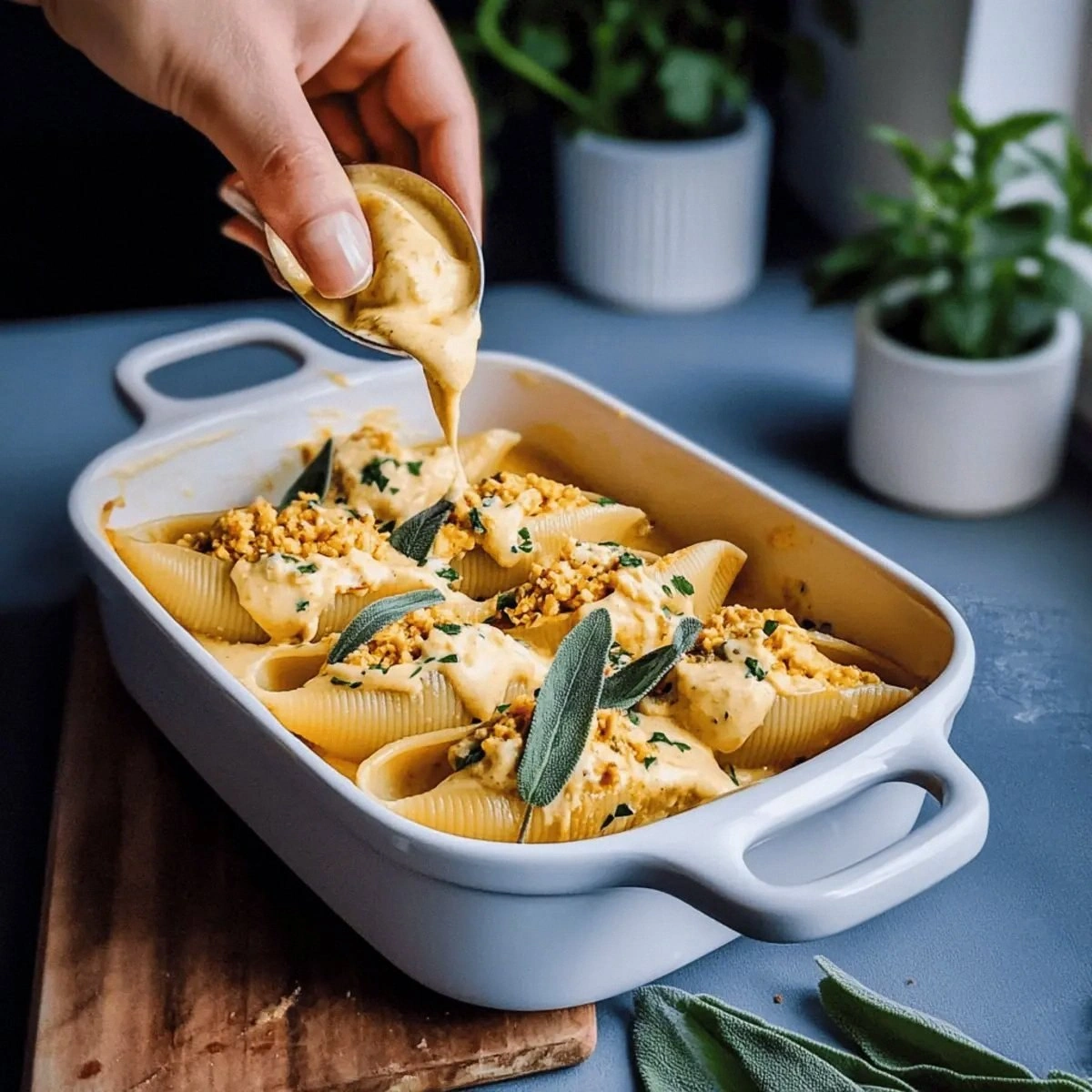
Last Tuesday I stood in my kitchen at 9:47 p.m., hair frizzed from the rain, clutching a half-carved sugar pumpkin like it owed me money. I had promised my book-club friends “something cozy and autumnal,” but the internet’s pumpkin-pasta recipes all tasted like they’d been blended with a scented candle. One bite and you could practically taste the potpourri. So I did what any self-respecting food-obsessed maniac would do: I dumped the whole experiment into the compost, opened a package of jumbo shells, and decided to build the fall pasta of my dreams from the ricotta up. By midnight the house smelled like toasted sage and buttery nutmeg, the shells were plump little orange-striped pillows, and I—true confession—ate four of them straight from the casserole dish while wearing mismatched socks and victory goggles. If you’ve ever craved pasta that tastes like your favorite sweater feels, you’re in the right place.
Picture this: the shells are bronzed at the edges, the sauce pools like liquid velvet, and when you spear one with your fork it sighs open to reveal a molten core of pumpkin-kissed tofu ricotta that’s so creamy you’ll swear it contains actual dairy. The sage leaves crisp into forest-green chips that crackle between your teeth, releasing a pine-and-citrus perfume that makes the whole kitchen smell like you hired a woodland sprite as your sous-chef. The pumpkin doesn’t scream “latte”; it whispers earthy sweetness that balances garlic, white miso, and a stealth pinch of smoked paprika. This is fall comfort food that refuses to be basic.
Most recipes get this dish wrong by turning it into orange mush, or they lean so hard on coconut milk that dinner tastes like sunscreen. Here’s what actually works: coaxing nutty flavor from the pasta itself, building a béchamel that uses lite coconut milk as a silky backdrop rather than a coconutty bullhorn, and seasoning the filling like you mean it—no polite pinch of salt and pepper, but a full-on flavor parade. The result? A casserole that tastes like it came from a trattoria tucked inside an autumn forest, run by a grandma who’s secretly vegan and definitely judging your knife skills.
Let me walk you through every single step—by the end, you’ll wonder how you ever made it any other way.
What Makes This Version Stand Out
Pumpkin Integrity: Instead of dumping purée into bland tofu, we roast the canned stuff for ten minutes to caramelize the natural sugars. The difference is like the gap between a flashlight and a sunset.
Ricotta Without Regret: Homemade tofu ricotta takes five minutes and beats store-bought almond ricotta the way a symphony beats a kazoo. We fold in miso paste and lemon zest so it tastes cultured, not cardboard.
Sage That Actually Crisps: Most versions burn the herbs or leave them slimy. We shallow-fry fresh leaves until they’re glassy, then crumble them over the top so every bite has a woodsy crunch.
One-Pot Sauce Magic: A roux-based pumpkin béchamel keeps the casserole from turning into a watery swamp under the shells. It coats each noodle like velvet evening gloves.
Make-Ahead Hero: Assemble the whole tray, slide it into the freezer, and bake straight from rock-solid for impromptu dinner parties. Your future self will send you a thank-you note written in garlic breath.
Omni-Convert Approved: I served this at a potluck next to sausage lasagna, and the carnivores circled back for thirds. One guy asked if I slipped goat cheese in—I consider that a win.
Alright, let’s break down exactly what goes into this masterpiece...
Inside the Ingredient List
The Flavor Base
Jumbo pasta shells are the edible equivalent of beanbag chairs—inviting, roomy, and ready to cradle whatever ridiculousness you stuff inside. Buy the ones with ridges; they grab sauce like Velcro. Olive oil goes in both the filling and the pan, so use the good stuff that tastes like green apples and makes you cough slightly—that peppery bite means the polyphenols are alive and kicking. Onion and garlic form the soffritto backbone; dice the onion so small it practically melts, because nobody wants a crunchy surprise mid-bite. Fresh sage is non-negotiable; dried tastes like dusty library books. The leaves fry in seconds, turning into forest-green potato chips that you will snack on before they ever reach the casserole—plan accordingly.
The Texture Crew
Tofu ricotta sounds like punishment until you whip it with nutritional yeast, white miso, and a glug of lemon juice. Suddenly it’s tangy, fluffy, and spoonable. Canned pumpkin purée is the silk scarf of vegetables—smooth, elegant, and eager to party with nutmeg. Speaking of which, buy whole nutmeg and grate it yourself; the pre-ground stuff tastes like sawdust that gave up on life. Vegan parmesan adds umami crunch; if you can’t find it, blitz raw cashews with garlic powder and salt for a quick hack. All-purpose flour is the thickening ninja in the béchamel—measure it like you’re in a chemistry lab, because too much and your sauce turns into kindergarten paste.
The Unexpected Star
Lite coconut milk is the secret to creamy without coconutty—full-fat will hijack the dish and make everything taste like sunscreen on a beach towel. Nutmeg is the whisper of warmth that makes people ask, “Why does this taste like my grandmother’s hug?” but in a good way. A single bay leaf sneaks into the sauce while it simmers; fish it out later or someone will think you’re feeding them foliage. Smoked paprika is the wink that says, “Yes, this is vegan, but we’re still here for a good time.”
The Final Flourish
Reserve a handful of fried sage leaves for the top; they shatter like autumn stained glass and make you look like a chef who has their life together even if you just microwaved your coffee three times. A drizzle of good olive oil right before serving adds glossy magazine glamour. Cracked black pepper should be fresh—twist the mill until it snows flecks like a starry night. If you’re feeling fancy, zest a little orange over the finished casserole; the citrus oils lift all that richness like opening a window in a stuffy room.
Everything’s prepped? Good. Let’s get into the real action...
The Method — Step by Step
- Bring a giant pot of water to a rolling boil—think jacuzzi bubbles, not a polite simmer. Salt it until it tastes like the ocean on a brave swimming day; under-seasoned pasta water is the saddest culinary felony. Drop in the jumbo shells and cook them one minute shy of package directions. They’ll finish in the oven, and nobody wants a limp noodle that splits open like an overripe banana. Stir occasionally so the shells don’t cling together like shy teenagers at prom.
- While the pasta parties, heat olive oil in a wide skillet over medium. Add the diced onion and a pinch of salt; sauté until the edges turn translucent and sweet, about five minutes. The kitchen should smell like you’re about to solve world peace with soup. Stir in minced garlic for just thirty seconds—any longer and it turns bitter, like a breakup text. Scrape the aromatics into a bowl and let them cool; hot onion will scramble your tofu ricetta into a weird scramble.
- Now for the game-changer: spread the canned pumpkin purée in the same skillet and let it roast, untouched, for two minutes. You’ll see the bottom darken like a toasted marshmallow; that’s caramelized sugar singing. Stir, repeat twice more, then scrape into a mixing bowl. Your pumpkin just went from baby food to bourbon-barrel maturity in under ten minutes.
- In that bowl, mash together the roasted pumpkin, tofu ricotta, vegan parmesan, nutmeg, and the cooled onion mixture. Taste boldly—add salt until the filling makes your tongue dance, not nap. Fold in half of the fried sage leaves; reserve the rest for later so you don’t eat them all while no one’s watching.
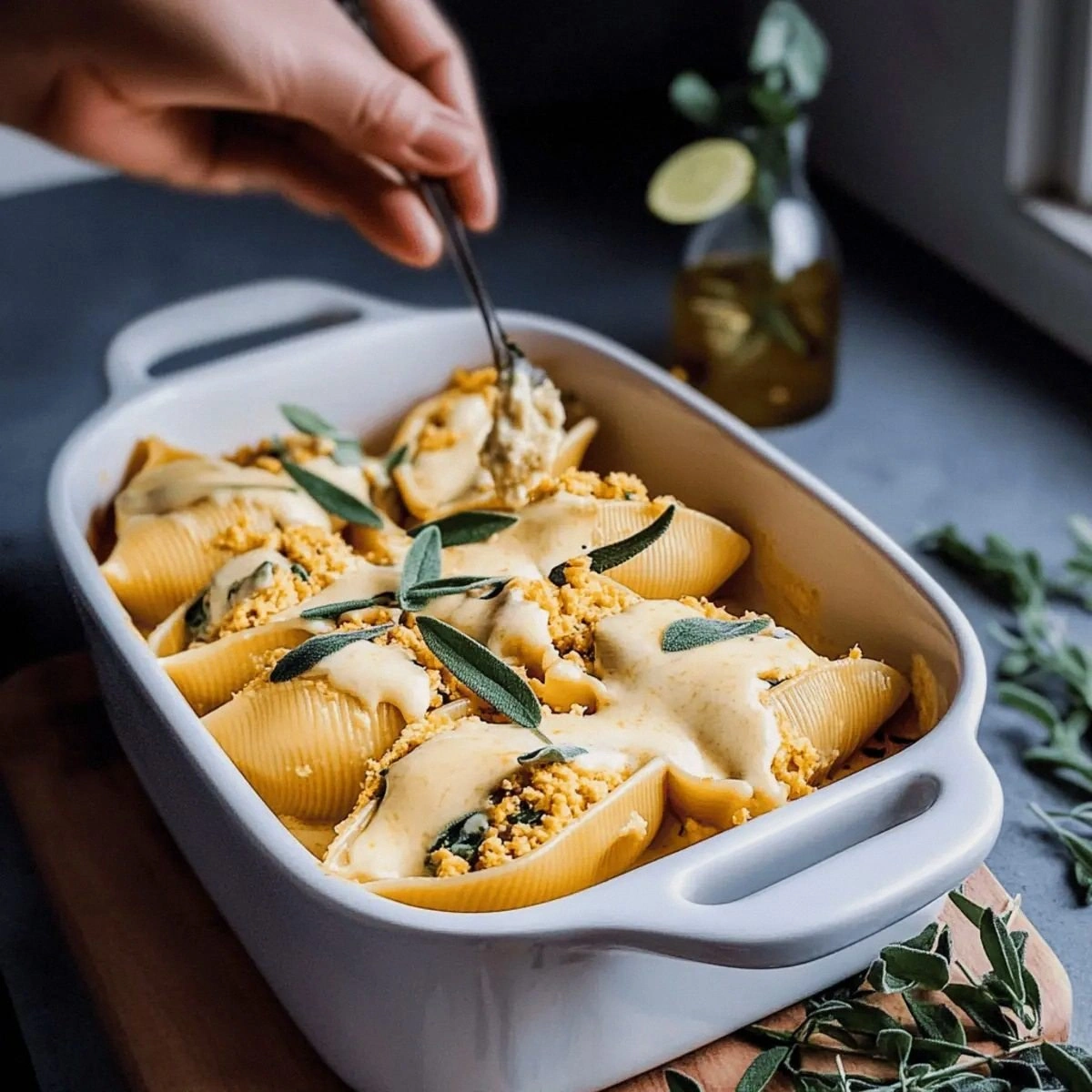
- Preheat your oven to 375°F (190°C). Spread a ladle of the pumpkin béchamel (we’ll make it next) on the bottom of a 9×13-inch casserole. This blanket prevents the shells from gluing themselves to the pan like stubborn stickers. Working assembly-line style, hold a shell in your palm, spoon in a generous tablespoon of filling, and nestle it seam-side up in the sauce. Repeat until the dish looks like a cozy orange city skyline.
- For the béchamel, melt olive oil in a saucepan over medium heat. Whisk in flour and cook, stirring constantly, until the roux smells like buttery popcorn and turns the color of beach sand—about two minutes. This is the moment of truth; blink and it burns like a jealous ex. Slowly pour in lite coconut milk while whisking like you’re defusing a bomb. Add nutmeg, bay leaf, and a pinch of salt. Simmer until thick enough to coat the back of a spoon; drag your finger across—if the line holds, you’re golden.
- Pour the remaining béchamel over the stuffed shells like you’re tucking them into bed. Jiggle the pan so the sauce seeps between every noodle crevice. Cover with foil, tenting it so cheese doesn’t stick—nobody wants to perform surgery on dinner. Bake for 20 minutes, then uncover and bake another 10 until the top freckles with golden spots. Your kitchen will smell so good the neighbors may file a noise complaint for excessive aromatics.
- Let the casserole rest for five minutes—this is the spa moment where the sauce relaxes and the shells set. Scatter the reserved crispy sage, drizzle with olive oil, and crack fresh pepper like you’re seasoning a runway. Serve hot, ideally with people who will fight you for the corner piece.
That’s it—you did it. But hold on, I’ve got a few more tricks that’ll take this to another level...
Insider Tricks for Flawless Results
The Temperature Rule Nobody Follows
Room-temperature ricotta blends silkier, so pull your tofu from the fridge thirty minutes before mixing. Cold tofu seizes up like a grumpy cat, leaving tiny pebbles in the filling. If you’re rushed, microwave the tofu (wrapped in a towel) for 15 seconds—just enough to take the chill off, not start cooking it.
Why Your Nose Knows Best
When the béchamel is ready, it will smell faintly of roasted hazelnuts and buttery popcorn simultaneously. If it still smells like raw flour, keep stirring; your nose is more accurate than any timer. A friend tried skipping this step once—let’s just say the sauce tasted like kindergarten library paste and she still hasn’t lived it down.
The Five-Minute Rest That Changes Everything
After boiling, toss the shells with a teaspoon of olive oil and spread them on a baking sheet to steam-dry. This prevents watery explosions in your casserole and helps the filling cling like a needy kitten. Skip this and you’ll be ladling pumpkin soup out of your baking dish.
Crispy Sage Insurance Policy
Fry twice as many sage leaves as you need; half will vanish before they hit the casserole. Store extras in an airtight jar—they stay crisp for three days and are killer crumbled over popcorn or avocado toast. I dare you to taste one and not go back for the rest like a snack-seeking missile.
Creative Twists and Variations
This recipe is a playground. Here are some of my favorite ways to switch things up:
Butternut Squash & Kale Remix
Swap pumpkin for roasted butternut and fold in finely chopped kale that’s been massaged with lemon. The squash brings candy-like sweetness, the kale adds iron-rich bite, and the color gradient looks like a sunset over Tuscany.
Smoky Chipotle Fireside Edition
Add a teaspoon of minced chipotle in adobo to the béchamel and substitute smoked paprika for the nutmeg. The result tastes like your pasta went camping and came back with stories and a leather jacket.
White Bean & Rosemary Comfort
Sub half the tofu ricotta with mashed cannellini beans and stir in fresh rosemary needles. The beans give a creamy heartiness that makes the dish feel like a wool sweater in food form—perfect for meat-eaters who “don’t do tofu.”
Truffle & Chestnut Holiday Luxury
Drizzle a few drops of white truffle oil over the finished casserole and fold in roasted, peeled chestnuts with the filling. Suddenly it’s Christmas Eve and you’re wearing velvet slippers even if it’s only October.
Sun-Dried Tomato & Spinach Summer Flashback
Replace pumpkin with blended sun-dried tomatoes and stir in wilted spinach. The flavor leaps from autumn forest to Mediterranean coast, proving this template works year-round if you’re seasonally rebellious.
Storing and Bringing It Back to Life
Fridge Storage
Transfer cooled portions to airtight glass containers; the sauce stains plastic like a crime scene. Refrigerate up to four days, though good luck making it last that long. Reheat individual servings in a skillet with a splash of water over medium, covered, until the centers are molten again. Microwave works in a pinch—cover with a damp paper towel so the pasta doesn’t turn into shoe leather.
Freezer Friendly
Assemble the entire casserole but stop before baking. Wrap the dish in a double layer of foil, then slide into a jumbo zip-top bag. Freeze up to two months. Bake straight from frozen at 350°F for about an hour, adding foil if the top browns too quickly. The shells emerge tasting like you just whipped them up—your future dinner guests will think you’re a wizard.
Best Reheating Method
Oven beats microwave every time for texture. Place leftovers in a small baking dish, splash with two tablespoons of plant milk, cover with foil, and warm at 325°F for 15 minutes. The steam revives the sauce to its former creamy glory, and the edges crisp up like they’re fresh from the first bake. Add a fresh crack of pepper and you’re back in business.