Picture this: the kitchen light is low, a mug of espresso sits on the counter, and the air is thick with the promise of something sweet and comforting. I had just finished a disastrous batch of brioche that turned out more like a rubbery dough than a fluffy cloud, and I was convinced that I needed a new approach. That night, I opened the pantry, grabbed a jar of coffee custard, and decided to turn my kitchen into a winter wonderland of flavor. The result? A brioche bun that feels like a warm hug in a bite, with a coffee-infused center that melts your heart.
From the moment the dough starts to rise, the kitchen smells like roasted beans and butter, a scent that instantly lifts the mood. The texture of the dough is slick and glossy, almost like a smooth river of milk and sugar, and you can hear the gentle hiss of yeast doing its thing. When you break the dough open, a fragrant steam rises, carrying notes of espresso and vanilla that dance in the air. The first bite is a soft, airy crumb that gives way to a slightly sweet, coffee‑laden filling that feels like a secret indulgence. It’s the kind of comfort that makes you forget the cold outside.
What sets this version apart is not just the coffee custard; it’s the meticulous balance of flour types, the buttery richness, and a touch of lightly spiced crumb topping that gives a hint of warmth. I dare you to taste this and not go back for seconds. The result is hands down the best version you'll ever make at home, and if you've ever struggled with brioche, you're not alone—this recipe fixes all the common pitfalls. And now the fun part: we’re going to walk through each step so you can recreate that same magic.
Okay, ready for the game‑changer? Let’s dive into the details that make these buns stand out from the crowd.
What Makes This Version Stand Out
- Taste: The coffee custard infuses the dough with a deep, aromatic espresso flavor that feels like a warm blanket on your tongue. The subtle sweetness from caster sugar balances the bitterness, creating a complex profile that lingers. The lightly spiced crumb topping adds a whisper of cinnamon and nutmeg that elevates the overall experience.
- Texture: The combination of plain and bread flour gives the buns a tender crumb while maintaining a slightly chewy bite. Butter melts into the dough, producing a silky mouthfeel that feels luxurious. The custard center remains moist, preventing the buns from drying out during baking.
- Simplicity: With just ten ingredients, this recipe is straightforward yet sophisticated. The steps are clear, and the process is forgiving for both novices and seasoned bakers. No fancy equipment required—just a standard mixer and a loaf pan.
- Uniqueness: Few brioche recipes incorporate a coffee custard filling; this twist turns a classic into a decadent treat. The crumb topping adds texture and flavor, giving a subtle crunch that surprises the palate. The result is a bun that feels like a holiday cookie, even in the middle of winter.
- Crowd Reaction: Friends and family rave about the “soft, buttery, coffee‑laden” texture and the delightful surprise of the custard. Many say they can't believe it's baked goods, and some even ask for the recipe after every bite. This recipe is guaranteed to impress at gatherings or as a cozy night‑in treat.
- Ingredient Quality: Using high‑quality butter, fresh eggs, and a strong white bread flour ensures the best flavor extraction. The coffee custard is made from real coffee grounds, not instant coffee, giving a richer, more authentic taste. The lightly spiced crumb topping uses real spices, not artificial blends.
Inside the Ingredient List
The Flavor Base
Plain (all‑purpose) flour and strong white bread flour form the backbone of our dough. The plain flour provides a neutral canvas that absorbs the coffee flavor, while the bread flour adds gluten for structure and chew. Together, they create a balance that keeps the buns tender yet capable of holding the custard filling. Skipping either flour type would alter the texture dramatically—plain flour alone would make the buns too soft, while bread flour alone would make them too dense.
The Sweetness Factor
Caster (superfine) sugar is the sweetener that melts quickly, allowing it to blend seamlessly into the dough. Its fine crystals dissolve without leaving grit, giving the buns a silky finish. If you prefer a lighter sweetness, you can substitute a portion of caster sugar with honey or maple syrup, but keep the ratio under 25% to avoid altering the dough’s hydration.
The Salt & Yeast Balance
Fine sea salt enhances all the flavors without overpowering them. It also helps regulate yeast activity, ensuring a consistent rise. Fast‑action dried yeast is chosen for its quick fermentation, which is essential for a quick batch. If you’re using fresh yeast, replace it with 1.5 times the amount in grams, and let it proof in warm water before adding to the dough.
The Liquid Layer
Whole milk provides fat and protein that enrich the dough, contributing to a tender crumb. The milk also helps dissolve the sugar and activate the yeast. Warm milk (about 37°C) is optimal for yeast activation; cooler milk will slow the process, while hotter milk can kill the yeast. If you’re lactose intolerant, you can use oat milk, but adjust the quantity to maintain the same hydration.
The Egg Connection
Three large eggs add richness, structure, and a golden crust. The yolks bind the dough, while the whites provide lift. Be sure to use room‑temperature eggs for even distribution; cold eggs can cause the dough to split. If you’re vegan, you can replace eggs with flaxseed meal (1 tbsp ground flaxseed + 3 tbsp water) as a binder.
The Butter Emulsion
Unsalted butter is the secret to that buttery mouthfeel. It’s added in small cubes so it melts evenly throughout the dough. Butter also creates steam pockets that lift the buns during baking. If you prefer a lower fat version, reduce the butter by 25% and add an extra tablespoon of oil.
The Coffee Custard Core
The coffee custard is a thick, silky mixture that fills the buns with espresso flavor. It’s made by combining brewed coffee, sugar, milk, and eggs until it thickens. The custard should be poured into the dough after it has risen, creating a moist, flavorful center. If you want a stronger coffee taste, increase the amount of brewed coffee by 50% while keeping the custard thickness consistent.
The Crumb Topping
The lightly spiced crumb topping adds a subtle crunch and warmth. It’s a mixture of flour, sugar, cinnamon, and nutmeg, lightly toasted before sprinkling over the buns. The topping caramelizes during baking, creating a golden crust that contrasts with the soft interior. If you’re allergic to nutmeg, you can omit it and use a pinch of cardamom for a different spice profile.
The Chocolate Accent
Grated chocolate provides a hint of bittersweet richness that balances the coffee custard’s sweetness. The chocolate should be grated finely so it melts into the dough during baking, creating small pockets of flavor. If you prefer a vegan option, use dark chocolate with no dairy or a chocolate alternative made from cocoa butter.
Everything’s prepped? Good. Let’s get into the real action.
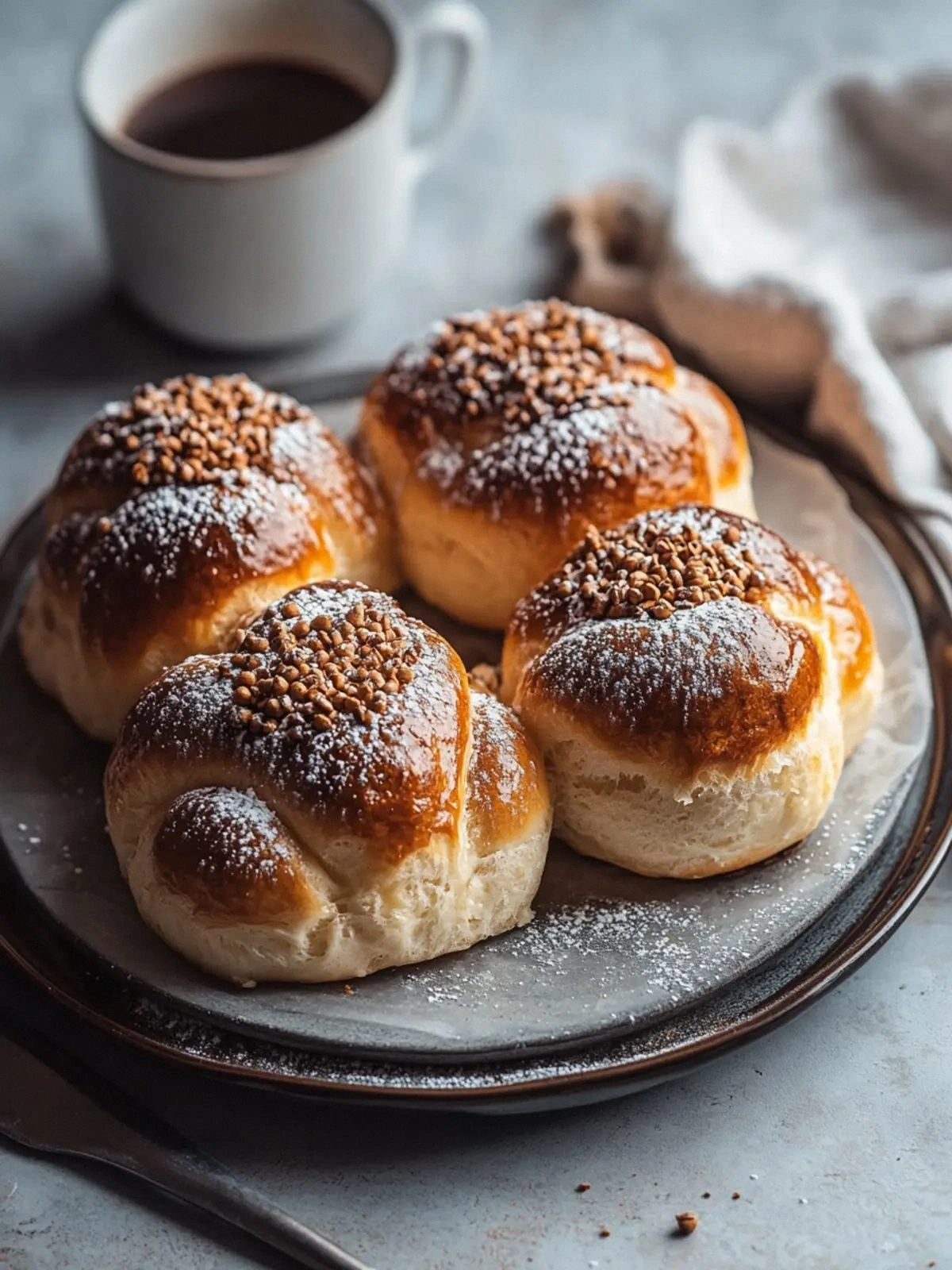
The Method — Step by Step
- Start by whisking together 500 g plain flour, 200 g bread flour, 75 g caster sugar, and 10 g fine sea salt in a large mixing bowl. The dry mix should look like a fluffy, even crumb. This step ensures that all dry ingredients are evenly distributed before the wet mix. It also helps prevent lumps that could affect the dough’s texture. Let the mixture sit for a minute to allow the flour to absorb the salt.
- In a separate saucepan, heat 300 ml whole milk until it’s just steaming, not boiling. Add the 3 large eggs, whisking vigorously to prevent scrambling. The mixture should be smooth and slightly glossy. Pour this liquid into the dry ingredients, mixing until a sticky dough forms. The dough will be tacky; that’s normal for brioche.
- Add 100 g unsalted butter in small cubes to the dough. Knead gently, folding the butter into the dough until it’s fully incorporated. The dough should become silky and elastic, with a smooth sheen. If it feels too dry, add a teaspoon of milk to loosen it. This step is crucial for achieving that buttery crumb.
- Place the dough in a lightly oiled bowl, cover with a damp towel, and let it rise at room temperature for 90 minutes, or until it has doubled in size. During this period, the yeast will work its magic, producing carbon dioxide that makes the buns airy. Check the dough’s rise by gently pressing a finger into it; it should spring back slowly. If it’s not rising, the yeast may have been expired or the temperature too low.
- Once the dough has doubled, gently punch it down to release the gases. Divide it into 8 equal portions, rolling each into a smooth ball. Place the balls on a parchment‑lined baking sheet, leaving space between them. This spacing allows the buns to expand without sticking together. Cover the sheet loosely with a plastic wrap to keep the dough from drying out.
- Let the dough balls rest for another 30 minutes while you prepare the coffee custard. In a small saucepan, combine 300 ml brewed coffee, 75 g caster sugar, and 75 g whole milk. Whisk until the sugar dissolves, then add 2 eggs and whisk until the mixture thickens into a custard-like consistency. This custard will be poured over the dough, so keep it warm.
- Using a small spoon, carefully spoon the custard onto the center of each dough ball. The custard should sit on top without breaking the dough. Gently press the dough around the custard to seal it, forming a small pocket inside. This step creates a moist, espresso‑filled center that’s the star of the show.
- Sprinkle 100 g lightly spiced crumb topping over each bun, pressing lightly to adhere. This topping will caramelize in the oven, giving a crunchy, aromatic finish. Place the baking sheet in a preheated oven at 190 °C (375 °F). Bake for 25–30 minutes, or until the buns are golden brown and a toothpick inserted into the center comes out clean. Remove the buns from the oven and let them cool on a wire rack for 10 minutes before serving.
That's it — you did it. But hold on, I've got a few more tricks that'll take this to another level. The secret lies in the finishing touches and how you handle the buns after baking.
Insider Tricks for Flawless Results
The Temperature Rule Nobody Follows
Many bakers bake brioche at 200 °C, but that can cause the buns to brown too quickly on the outside while remaining undercooked inside. Lowering the temperature to 190 °C ensures a gentle, even bake, allowing the custard to set properly. If you’re using a convection oven, reduce the temperature by 10 °C to compensate for the fan’s extra heat. This subtle adjustment can mean the difference between a perfectly golden bun and a charred mishap.
Why Your Nose Knows Best
During the final 10 minutes of baking, the aroma of coffee and butter will fill your kitchen, signaling that the buns are ready. Trust that scent; it’s a reliable indicator of doneness. If the aroma is too weak, give them a few more minutes. If it’s too strong, pull them out immediately to avoid burning.
The 5‑Minute Rest That Changes Everything
After removing the buns from the oven, let them rest on a rack for exactly five minutes. This resting period allows the steam to redistribute, preventing sogginess at the base. It also lets the custard settle, ensuring a consistent bite. Skipping this step often results in a gummy center that feels like a soggy pastry.
Beat the Crumb for Extra Crunch
For an extra crunchy crumb, lightly toast the crumb topping in a dry skillet over medium heat for 2–3 minutes before sprinkling it over the buns. The toasting process brings out the spices’ full flavor and gives the topping a crisp texture. If you’re short on time, a quick pre‑bake in a 200 °C oven for 2 minutes does the trick.
Keep the Buns Moist After Cooling
Once the buns have cooled, wrap them in a clean kitchen towel and store them in an airtight container. This keeps the buns from drying out and preserves the buttery softness. If you plan to serve them the next day, reheat them in a 170 °C oven for 5 minutes to revive the crust.
Watch Your Yeast Activation
Always check your yeast’s potency before using it. Fresh yeast should be dissolved in warm water with a pinch of sugar; it should froth within 5 minutes. If it doesn’t, it’s time to replace it. Using weak yeast can result in under‑rise and dense buns.
Creative Twists and Variations
This recipe is a playground. Here are some of my favorite ways to switch things up:
Hazelnut‑Infused Delight
Replace the coffee custard with a hazelnut spread and a splash of hazelnut milk. The nutty flavor pairs beautifully with the brioche’s buttery base, creating a dessert that feels like a holiday treat. Sprinkle chopped hazelnuts on top before baking for added crunch.
Chocolate Mocha Explosion
Swap the coffee custard for a chocolate‑mocha mix using cocoa powder and espresso. Add a pinch of sea salt to enhance the chocolate’s depth. Finish with a dusting of powdered sugar for a decadent finish.
Spiced Apple Brioche
Incorporate diced apples and a dash of allspice into the dough. The fruit’s natural sweetness balances the coffee custard, while the spices add warmth. Serve warm with a drizzle of caramel sauce for an extra indulgence.
Gluten‑Free Version
Use a 1:1 gluten‑free flour blend that includes xanthan gum. Replace the plain flour with the blend and keep the bread flour portion the same. Adjust the liquid slightly to compensate for the higher absorbency of gluten‑free flours.
Vegan Variation
Replace eggs with flaxseed meal, use oat milk instead of whole milk, and substitute dairy butter with vegan butter. The custard will be slightly lighter, but the coffee flavor remains strong. This version is perfect for plant‑based diners.
Holiday Cinnamon Swirl
Add a swirl of cinnamon butter between the dough layers before baking. The cinnamon-infused butter melts into the bun, giving a warm, spiced aroma. This variant is ideal for a cozy winter gathering.
Storing and Bringing It Back to Life
Fridge Storage
Store cooled buns in an airtight container at room temperature for up to 3 days. The buns will stay soft and flavorful if kept away from direct heat. Avoid storing them in the fridge, as the cold can cause the butter to solidify and the texture to become dense.
Freezer Friendly
Wrap each bun tightly in plastic wrap, then place them in a freezer bag. Freeze for up to 2 months. When ready to eat, thaw at room temperature for 1 hour before reheating. This method preserves the flavor and texture remarkably well.
Best Reheating Method
To revive frozen or stale buns, preheat the oven to 170 °C (340 °F). Place the buns on a parchment‑lined tray and bake for 10 minutes, or until the crust is crisp and the interior is heated through. Add a splash of water to the baking tray to create steam, which keeps the buns moist and restores their soft crumb.